Low-energy productivity is not about squeezing maximum output from every condition. It is a way to protect important obligations, choose work that is realistically possible, and stop before a difficult day becomes a false story about your character.
If low energy is new, severe, persistent, or connected to a health concern, consider appropriate medical or professional support. A productivity method cannot diagnose or treat the cause.
Start with consequences, not the easiest task
Low energy can make small, comfortable tasks attractive. Before choosing one, scan for:
- A deadline today or tomorrow.
- A message that another person needs before proceeding.
- A health, safety, legal, academic, or financial obligation.
- A task that becomes materially harder if it waits.
Protecting an urgent task does not always mean finishing it now. It may mean sending a two-sentence status update, requesting an extension, gathering the first document, or scheduling a realistic work block before the deadline.
Choose an energy lane
Use a simple self-report, not a judgment.
Low energy
Choose concrete work with a short finish line and limited decision-making:
- Send a known reply.
- Put one document in the correct folder.
- Confirm an appointment.
- Read the first page and highlight the issue.
- Write three headings.
- Gather the materials for later work.
Normal energy
Choose a defined task that needs ordinary concentration:
- Draft a short email.
- Review a document.
- Complete a 20-minute errand.
- Work through one section of a project.
High energy
Use the capacity for difficult, uncertain, or sustained work:
- Draft the first full version.
- Solve the hardest open problem.
- Make a decision with several tradeoffs.
- Complete a longer focus session.
Energy changes. The same task may belong in a different lane after you make the first step clearer.
Reduce the start, not the truth
Suppose “Finish the research memo” is due tomorrow. Low energy does not make the deadline disappear. It changes the next action.
Instead of changing the task to something unrelated, try:
- Open the assignment and write the precise question.
- List the three authorities already found.
- Draft the rule heading.
- Read and brief one case.
- Email the supervisor with a specific status and question.
The smaller action should reduce risk on the real task. It should not merely create the appearance of being busy.
Use a short, honest session
Choose a small amount of time you can actually protect: 5, 10, or 20 minutes. Define the action before the timer starts. When time ends, decide among three outcomes:
- Done: the defined action is complete.
- Continue: energy is available and another short session is useful.
- Stop and record: save what changed and write the next starting point.
A timer expiring does not mean the task is done. It means you have reached a decision point.
Use maintenance work intentionally
Maintenance tasks can be worthwhile on a low-energy day when they reduce friction later. Examples include:
- Put tomorrow’s documents in one folder.
- Charge the device needed for the appointment.
- Create the blank file and title it.
- Write the question to ask when an office opens.
- Clear one physical work surface.
The test is whether the maintenance action makes a meaningful future action easier. Avoid using endless tidying to evade an urgent uncomfortable task.
Make a “minimum useful day” plan
Choose no more than three items:
- Protect: one action that prevents a meaningful problem.
- Progress: one small action on an important project.
- Prepare: one action that lowers tomorrow’s starting cost.
Example:
- Protect: send the filing-status email before noon.
- Progress: read and note the first case for 10 minutes.
- Prepare: place tomorrow’s documents and charger in the bag.
Anything else is optional. A short plan makes completion visible and reduces the temptation to rebuild the entire week while tired.
Know when rest is the useful action
Rest can be a legitimate choice, especially when additional work would be unsafe, inaccurate, or self-defeating. Record the next starting point and protect any real deadline before stopping. “Rest until 7:00, then review the first paragraph” is different from allowing the task to vanish.
How FirstNudge supports low-energy work
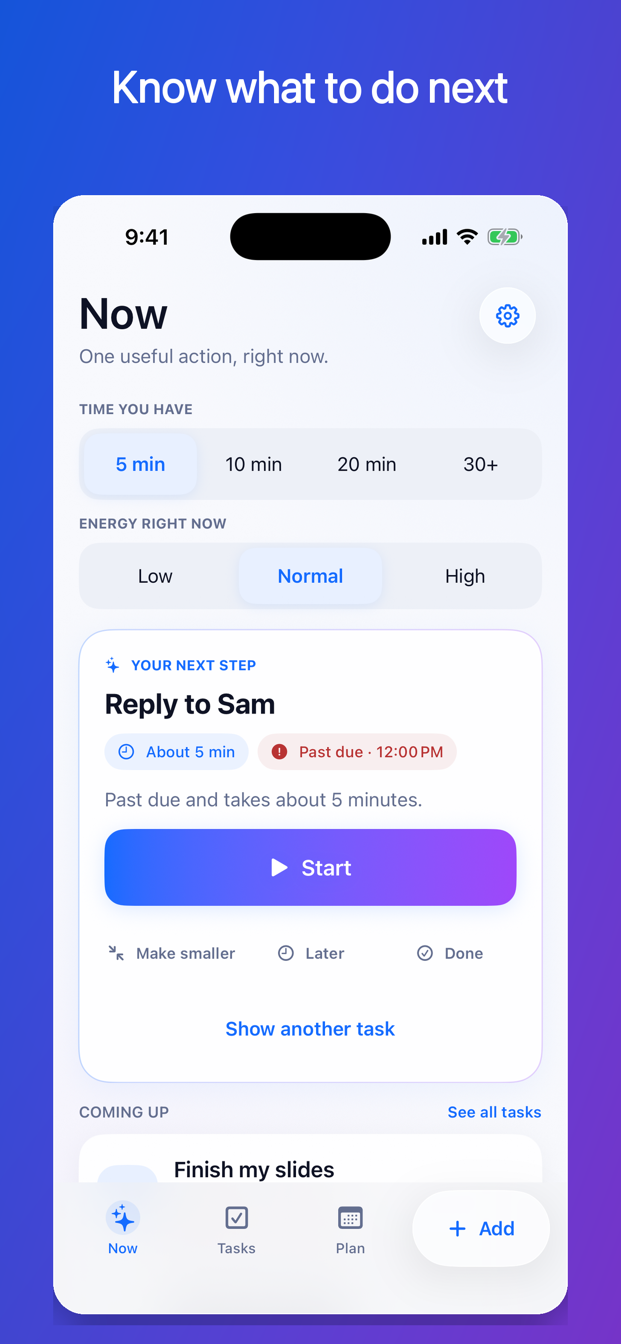
On the Now screen, choose the time you have and select Low energy. FirstNudge looks for one eligible action that fits while keeping urgent work visible. If the important task is too large, Make Smaller can suggest a concrete first step. You remain free to choose another task, postpone the attempt, or stop.
FirstNudge is a productivity tool, not a health assessment. The energy choice is a practical input for matching work, not a diagnosis or measurement.
Low-energy checklist
- Scan for urgent consequences first.
- Choose the time and energy actually available.
- Reduce a large task to a step that changes something.
- Use a short session with a defined finish line.
- Record the next starting point before stopping.
- Treat rest as a decision, not a disappearance.
- Seek appropriate help when low energy may reflect a health concern.
Frequently asked questions
Should I do only easy tasks when my energy is low?
No. Start by protecting urgent or consequential work. Then choose a step that fits. Sometimes the correct low-energy action is a small piece of a hard task.
What if every task feels too large?
Choose a discovery or setup step that takes five minutes: open the file, find the last email, write the question, or place the materials in front of you.
Is resting procrastination?
Not automatically. Rest is different from avoidance when you make the choice consciously, protect real deadlines, and record when or how you will return.
Match the next action to the capacity you have—not the day you wish you had.
Choose a low-energy next step in FirstNudge